

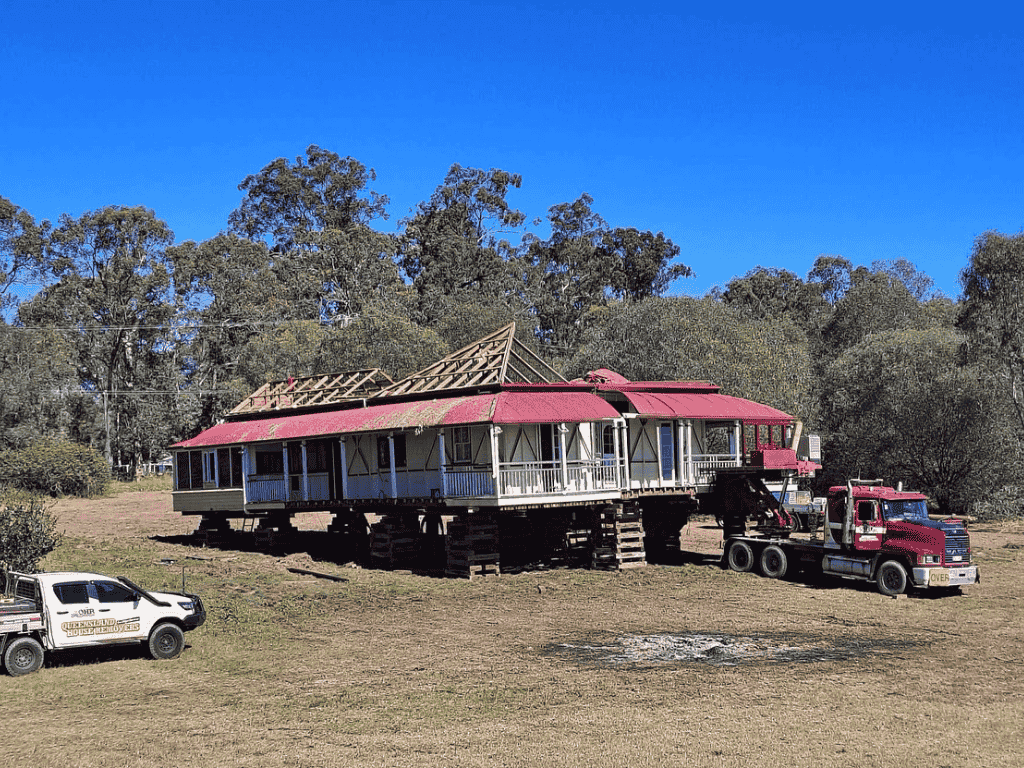
Moving a house—or more precisely, relocating a dwelling—is a significant life event. It comes with a unique set of challenges and costs that differ from a typical house removal (i.e., moving furniture and belongings). In this guide, we’ll dive into the main expenses you’ll face, and show you how Queensland House Removers (QHR)—a fully registered and insured collective of builders—can help you navigate every step smoothly across Queensland, Northern New South Wales and the Redland Bay Islands.
What Makes House Relocation Unique?
Unlike most removals, where you pack boxes and hire a van, house removal involves lifting or sliding an entire structure, transporting it, across public roads, and then setting it down on a new foundation. It’s an engineering-intensive process requiring heavy machinery, expert planning, engineering assessments, permits, insurance, and utility disconnection. A lot more involved than your typical furniture haul.
Main Cost Categories
Below is a comprehensive overview of the main expenses associated with relocating a house:
Pre‑Move Engineering & Planning
- Structural Inspection: A QHR representative will assess your home to confirm it is structurally sound for removal and capable of withstanding the transportation process.
- Building approval and Engineering: Before relocating a removal home, you will need the necessary building approvals from your local council and a structural engineering assessment to ensure the home is suitable for relocation
- Detailed planning: This includes route selection, identifying obstacles (overhead wires, trees, bridges).
Permits & Approvals
- Council permits: Required from both the departure and destination councils.
- Road authority permits: Particularly relevant for moving on public roads—requires permits, traffic control, and police escorts.
- Neighbour and community notifications: In some areas, you’ll need to formally inform local households, especially for large or wide loads.
Physical Lifting & Transport
- Lifting equipment: Hydraulic trailers
- Transport machinery: Trucks with Hydraulic trailers, designed and built for transporting of houses.
- Labour cost: A skilled crew of labourers, drivers, spotters and pilot drivers..
- Traffic logistics: If your house is classified as oversized, wide load permits, police escorts, and pilot vehicles will be required. These are all arranged by QHR’s dedicated permits coordinator.
Route Preparations & Infrastructure
- Severing and reinstating services: Disconnecting and later reconnecting electricity, water, gas, sewage, data, and stormwater.
- Temporary infrastructure removal: Cutting back foliage, Tree removal, removing fences, lifting over fences and street signage.
- Road modifications: In rare cases, you may pay to temporarily raise wires.
House Stumping
- Foundation: Once the house arrives at your new site, it will be stumped and secured onto newly prepared house stumps.
Insurance & Contingencies
- Transit insurance: To cover road incidents, utility damage, etc.
- Public liability: To cover accidents or damage incurred during the move.
- Contingency buffer: Weather delays, unplanned site work—don’t underestimate.
Other Costs & Extras
- Storage fees: Temporary holding if the destination site is not yet ready.
- Access issues: Portable cranes for hard to get to sites.
- Second-site: Tow trucks for wet or problem sites.
Typical Cost Ranges
Every job is unique, but here’s a rough guide to what you might pay in Queensland/Northern New South Wales:
| Task | Estimated Cost Range (AUD) |
| Engineering & Building Approval | $10,000 – $15,000 |
| Single Shift roof on (Average size 7m x 13m) Single Shift roof off (Average size 7m x 13m) $30,000 | $24,000 |
| House cut into 2 pieces, roof off | $45,000 to $60,000 |
| Difficult site allowance | $2,000 – $5000 |
| Lowset stumps (0.9m) per stump | $450 per stump |
| Highset stumps (3.0m) per stump | $650 per stump |
| Bracing per set (10-14 sets required | $350 |
These figures are illustrative—homes larger than average or requiring longer moves can escalate costs significantly.
Influencing Factors
Several variables affect your final cost:
- Distance travelled: More kilometres translate to more time, crew hours, permits, fuel, and logistical planning.
- Site conditions at both ends: Slope, access, and foundation type may add on-site expenses.
- Timing: Bad weather can drive costs higher.
- Mechanical obstacles: Power lines, street signage or large trees that must be temporarily removed.
Why Choose Queensland House Removers?
For such a specialised undertaking, you want a team with expertise, local knowledge, and a proven track record. Enter Queensland House Removers (QHR).
Fully Registered & Insured Builders
QHRs at the core are licensed builders and engineers, not casual removalists. That means:
- They carry full insurance and licences for heavy structural work.
- They adhere strictly to Australian building and engineering codes.
- You can site them as your Principal Contractor for the move.
Comprehensive Service Offering
QHR manage every stage:
- Initial assessment – A site inspection determines the feasibility and scope.
- Detailed planning & permits – They organise transport permits, Transport Management PLans, route plans and liaise with councils and utility authorities.
- Lift & transport execution – They bring their hydraulic trailers and trucks to transport your house to its new site.
- Site prep at destination – Site prep may be required.
- Re‑establishment & inspection – Inspections by engineers for stumping.
Throughout, they communicate clearly and maintain a project log so you’re aware of progress and any hiccups.
How QHR Helps You Control Costs
Amazing moves can get expensive fast, but Queensland House Removers employ strategies to help:
- Detailed upfront quotes: QHR breaks down costs clearly—no hidden surprises.
- Route optimisation: Years of experience mean they can often find cheaper or faster paths.
- Bundled permits: Managing multiple approvals together can reduce admin time and fees.
- In‑house foundations: Their builder status means they can handle the stumping in-house, potentially saving significant sums.
- Seasonal scheduling: They plan around local weather to avoid costly delays due to storms or logistics congestion.
Tips to Keep Costs Manageable
Even with QHR’s guidance, homeowners can play a big role in controlling expenses. Here’s how:
- Early decisions: Lock in your move date and destination as soon as possible.
- Clear obstacles: Trim trees, relocate fences or aerials before the crew arrives.
- Site readiness: Have the site ready and peg out of house position.
- Know your local rules: Learn what your council expects.
Why It’s Worth It
You might wonder: “Why relocate? Why not rebuild new or renovate?” But a move can deliver huge benefits:
- Historical or sentimental value: Keep your original home intact.
- Cost‑effective: For older homes, relocation can be cheaper than demolition plus rebuilding.
- Preservation: Retain architectural styles or building quality from past eras.
- Strategic land use: Free up land or shift your home for better site orientation.
When you factor in preservation, character, potential heritage value and reduced material waste, moving makes a lot of sense.
Why QHR Stands Out
- Builder-centric: Not mere movers, but established construction professionals.
- Fully insured & registered: Allows their clients to delegate oversight with confidence.
- Local expertise: Decades of Queensland & Northern NSW experience.
- Transparent pricing: Clear breakdowns, no hidden mark‑up.
- End‑to‑end capability: From haulage to foundation pouring.
- Tailored routes & schedules: Designed for your property, not a generic checklist.
Choosing the Right House Relocation Team
When evaluating providers, you should:
- Check licences: Do they carry builders’ licences?
- Ask for insurance details: What’s covered?
- Review past moves: Ask for case studies in similar areas you’re moving through.
- Confirm scope: Will they manage permits, surveys, utility disconnections, foundations, and reconnections?
- Set deliverables: Agree on the foundation spec required at the destination site.
- Plan for changes: Include contingency funding and timetable extra days.
Queensland House Removers tick all these boxes.
How the Process Works—with QHR
Here’s a typical project flow:
- Initial enquiry: You provide your address, move date, and home details.
- Site visit & quote: QHR representative assess your house and route feasibility.
- Detailed proposal: Cost breakdown, timeline, permit management, and responsibilities.
- Permit acquisition: QHR liaise with councils, roads, and utilities.
- Site preparations: You ready both old and new sites as advised.
- Lift & transport day(s): QHR crew execute the move safely and efficiently.
- Final setup: The house is placed, stumped, and ready for connections.
FAQs
How long does a house move take?
Short moves (within 5 km) normally take 1–3 days. Longer journeys or complex infrastructure requirements can stretch to a week or more.
Do I need to organise plumbing and electrical disconnection?
QHR typically coordinate with local trades and authorities, but foundation or reconnection trades (plumber, electrician) should be booked by you, or QHR can help engage them.
Will my house get damaged?
A well‑managed move, especially by builder‑led teams like QHR, minimises risk. Structural engineers design supports to protect walls and frames. Insurance also offers peace of mind.
What if the site isn’t ready on the day of the move?
Delays are costly. QHR insist on a fully prepared site in advance—think slab, stumps, clear access, even surface compaction if required.
Can heritage colour schemes or original wall finishes be saved?
Absolutely. QHR’s specialist techniques protect finishes, and their builder knowledge allows pre‑move adjustments to retain historical integrity.
Are there any grants or rebates for house relocation?
Not commonly. However, Queensland councils occasionally offer heritage subsidies. QHR can assist with initial council liaison to investigate eligibility.
Queensland House Removers (QHR) are not everyday movers—they’re licensed builders and permit specialists equipped to handle every aspect from cradle to re‑sit.
By choosing QHR, you not only get a technically sound and insured service but also one that understands local terrains, regulations, and conditions.
If You’re Considering a Move…
- Begin with a site inspection—QHR can provide that.
- Get detailed quotes, not rough ballparks.
- Organise and timeline your site readiness (foundations, services, clearances).
- Plan and budget beyond the lift: include site works, reconnections, and inspection fees.
- Ask QHR how they can simplify each step, reduce duplication of effort and keep control of costs.
Moving your house is a big decision—but with the right team and a clear eye on costs, it can also be a smart, heritage‑preserving, and emotionally rewarding choice. Want to explore a move? Get in touch with Queensland House Removers today.


